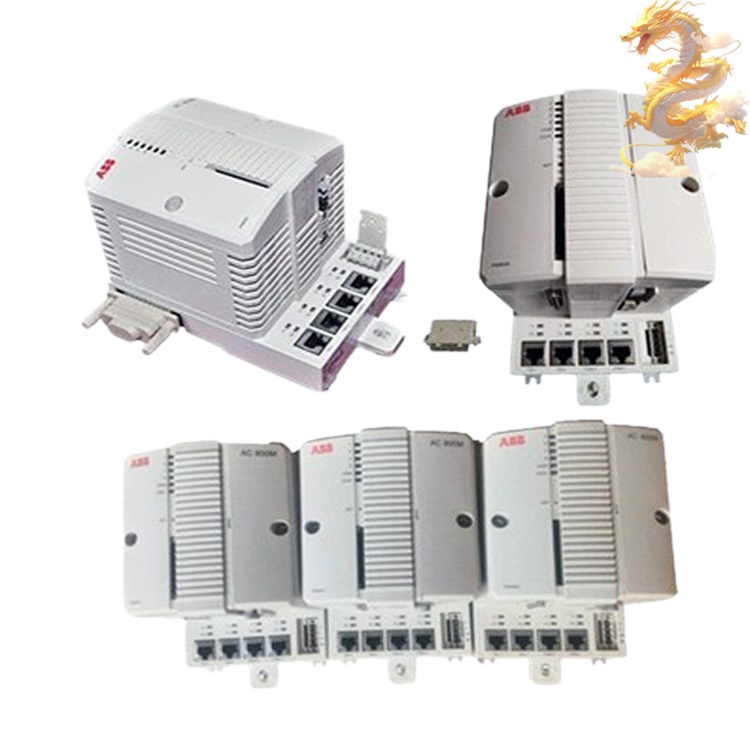
PM867K02 ABB AC 800M High Integrity Processor Unit 3BSE081638R1-PM867
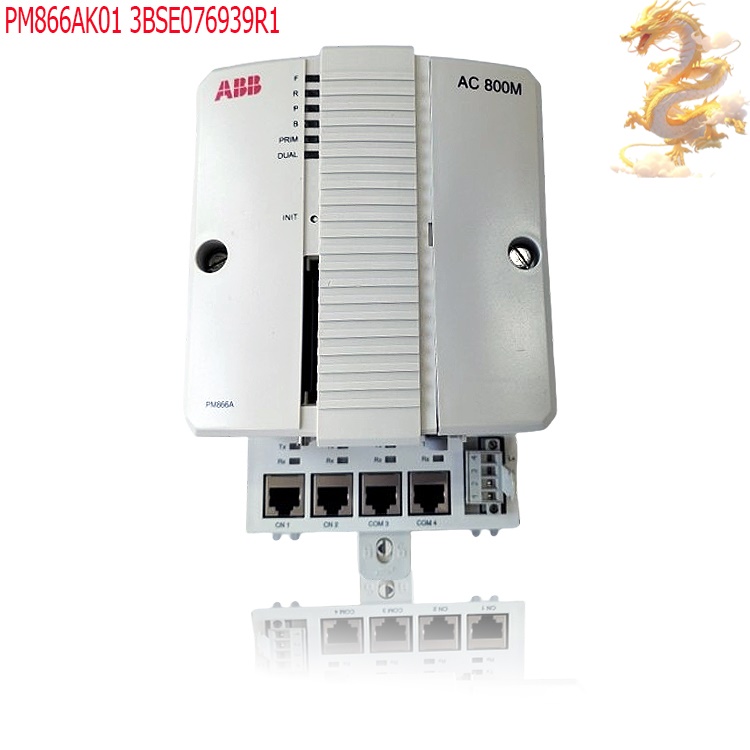
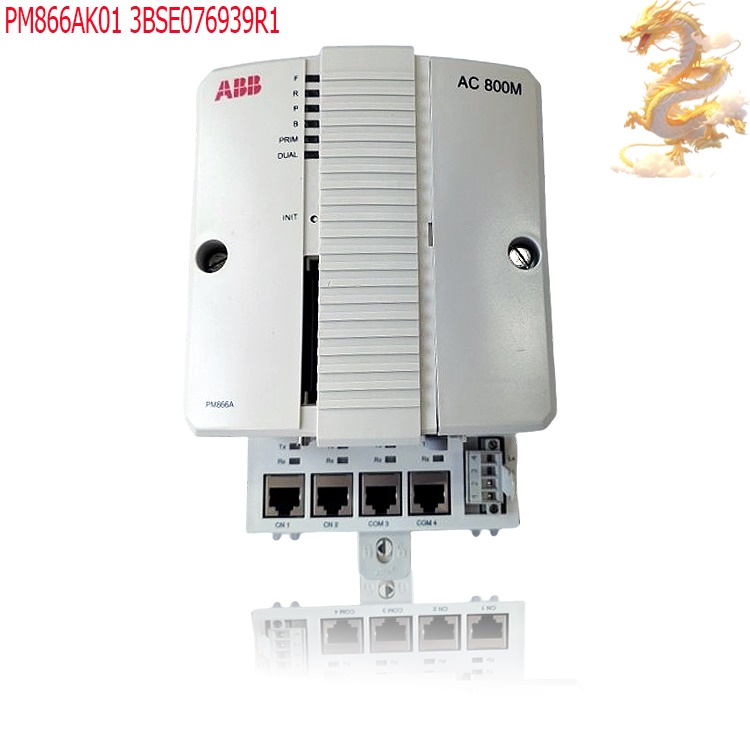
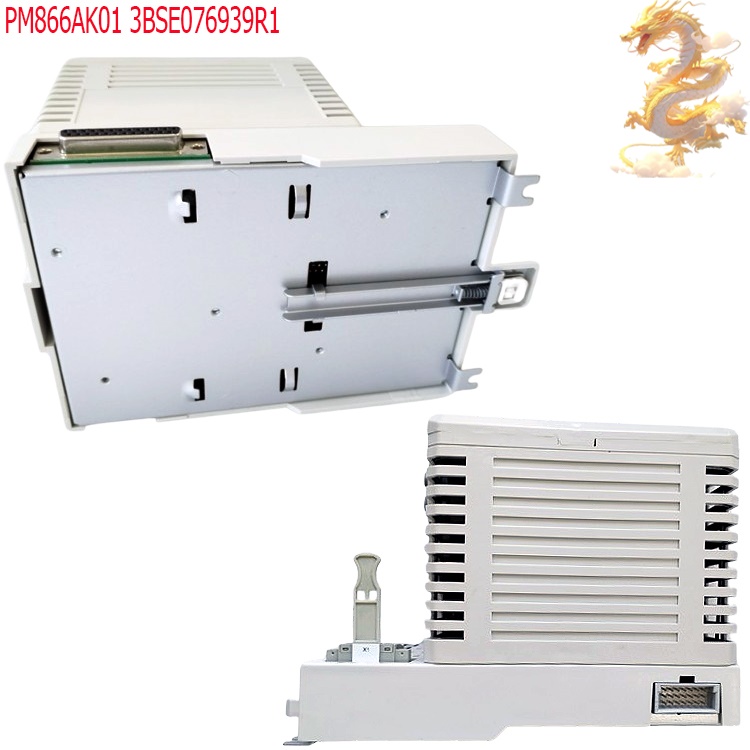
This unit serves as the core computational component of the control system. Signals from field sensors—such as those for pressure, temperature, liquid level, or gas detection—are transmitted via the S800 I/O subsystem and the fiber-optic ModuleBus to the processor. The processor executes pre-loaded programs to perform logic operations and closed-loop control, subsequently issuing commands to actuate field devices like control valves, shut-off valves, and motors, thereby enabling the automated control of production facilities. As part of the AC 800M family of programmable automation controllers, it operates within the System 800xA Distributed Control System (DCS) platform. The module holds international functional safety certification (TÜV) in accordance with IEC 61508 SIL3, making it the central logic-processing unit for Safety Instrumented Systems (SIS) in high-risk sectors such as oil and gas, chemical processing, and power generation.
.jpg)
.jpg)
.jpg)
All products listed on this website are specialized items, and their market prices are subject to constant fluctuation.
Please rely on the quotes provided by our customer service team; the prices displayed on the site may not be final or accurate.
Before placing an order, please consult with our customer service representatives to confirm the specific model, product details, and pricing.
We offer both pre-owned (previously used) and brand-new items—please contact our customer service team to discuss your requirements.
Alternative names for PM867K02 3BSE081638R1:
Redundant Processor PM867K02 3BSE081638R1
PM867K02 3BSE081638R1 Redundant Control Unit
AC 800M Processor Unit PM867K02 3BSE081638R1
PM867K02 3BSE081638R1 System 800xA DCS Control Unit
I. Basic Technical Specifications
Product Category: AC 800M High Integrity Processor Unit (HI CPU)
Processor: MPC866 industrial-grade microprocessor, 133 MHz
Memory: 64 MB (approx. 46.6 MB available for applications), with battery backup
Safety Certification: IEC 61508 SIL3 (TÜV), ISASecure
Associated Monitoring Module: SM812 (enables a 1oo2D dual-channel safety architecture)
Power Supply: 24 V DC (typical power consumption approx. 5.1 W; maximum approx. 8.6 W)
Mounting: DIN-rail mounting; supports hot-swapping
Dimensions: 119 mm (W) × 186 mm (H) × 135 mm (D)
Weight: Net weight of module approx. 0.8 kg (approx. 1.2 kg including baseplate)
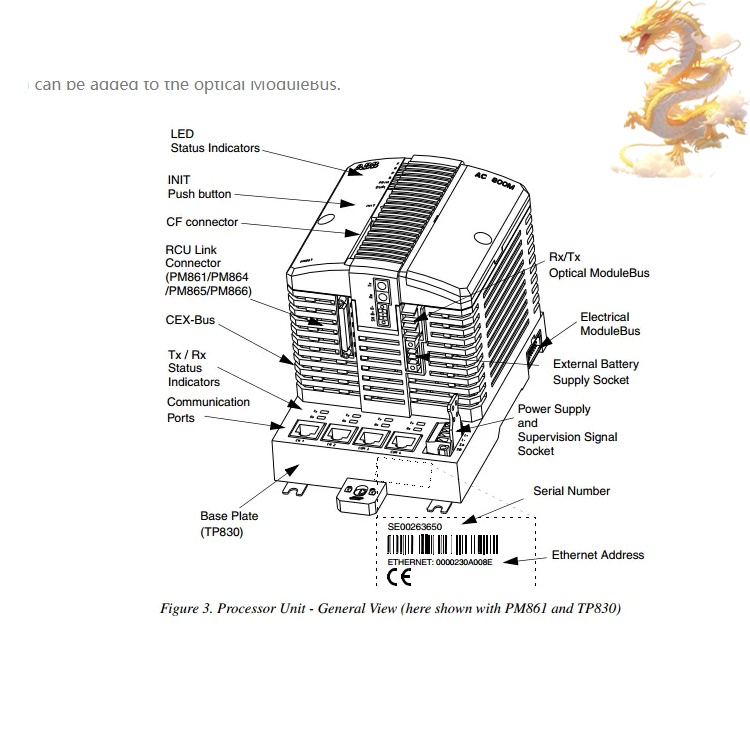
Communication Interfaces: Dual redundant Ethernet ports (10/100 Mbit/s, supporting the RNRP redundant network protocol), CEX expansion bus, RCU Link (Controller Redundancy Link)
Supported Platform: ABB Ability System 800xA DCS
II. Operating Principle
1. System Positioning
The PM867K02 3BSE081638R1 serves as the core computing unit of the control system. Signals from field sensors (such as those for pressure, temperature, liquid level, or gas detection) are transmitted via the S800 I/O subsystem—using a fiber-optic ModuleBus—to the processor. The processor executes pre-loaded programs to perform logic operations and closed-loop control, subsequently issuing commands to actuate final control elements like regulating valves, shut-off valves, and motors, thereby enabling the automated control of production facilities.
2. High-Integrity Safety Mechanism (Dual-Layer Redundancy)
The AC 800M HI architecture ensures safety and availability through two independent dimensions:
Safety Integrity Layer (1oo2D – One-out-of-two with Diagnostics): In SIL3 applications, safety logic is processed in parallel by the PM867 (primary execution channel) and the SM812 (secondary execution/online diagnostic channel), with real-time comparison of the results. Any discrepancy between the two outputs is identified as a fault, triggering a transition to a pre-defined safe shutdown state—achieving a "fail-safe" condition. The use of diverse hardware execution paths ensures that random failures are virtually impossible to overlook.
Availability Layer (CPU Redundancy): In redundant configurations, two PM867K02 3BSE081638R1 controllers are interconnected via a dedicated RCU Link cable and connected to the same CEX bus, operating in a primary/backup arrangement. If the primary controller fails, the backup takes over seamlessly (bumpless transfer). Furthermore, the communication network utilizes the RNRP (Redundant Network Routing Protocol) to provide dual-channel hot-standby redundancy.
Embedded Safeguards: The system incorporates multi-layer CRC checks, dual code generation with cross-verification, and compiler re-validation to prevent unauthorized program tampering or accidental degradation. SIL Software Lock: Once an application is defined as a "safety object," the system automatically restricts the use of function block libraries to those that are SIL-certified. If compliance requirements are not met, the system will reject the download of the application.
3. Programming Methods
Safety applications support Function Block Diagrams (FBD) and Structured Text (ST) as per the IEC 61131-3 standard; Sequential Function Charts (SFC) are permitted for use only up to SIL 1–2. Standard process control can utilize all five IEC 61131-3 languages. System 800xA provides certified function libraries—such as those for Supervision and Fire & Gas—covering typical scenarios including detector inputs, interlock-based shutdowns, and fire and gas monitoring.
III. Product Advantages
Integrated Safety and Control: A single High-Integrity (HI) system handles both standard process control and SIL 3 safety interlocks. This eliminates the need for a separate Safety Instrumented System (SIS), resulting in savings on hardware investment, cabinet space, and total lifecycle costs.
SIL 3 High Safety Integrity: Certified by TÜV in accordance with IEC 61508, the system meets the highest safety integrity requirements for high-risk industries and is suitable for use in emergency shutdown (ESD) and fire and gas protection loops.
High Availability and Reliability: The system features multi-layered redundancy—including CPU, network, and I/O redundancy—along with support for hot-swapping of modules. In Dual or Quad configurations, the safety system can achieve an availability of over 99.9999%.
Fail-Safe Design: Through the use of diverse execution paths (PM867 + SM812) and online diagnostics, the system ensures that any internal fault drives the process to a safe state, preventing dangerous failures.
Industrial Cybersecurity: Certified under ISASecure, the system possesses fundamental capabilities for defending against cyberattacks on industrial control networks. Openness and Compatibility: Supports dual-redundant Ethernet and communication modules—such as PROFIBUS, Modbus, and HART—enabling integration with third-party equipment and ABB drives. Its modular architecture facilitates project expansion.
High Engineering Efficiency: Features an object-oriented 800xA engineering environment, pre-certified industry libraries, and reusable control modules, which shorten the cycles for design, testing, and commissioning.
IV. Applications Across Industries
The PM867K02 3BSE081638R1 is primarily designed for process industries with stringent safety requirements for personnel, equipment, and the environment:
Oil and Gas (onshore/offshore platforms, long-distance pipelines): Handles logic for Emergency Shutdown (ESD), Fire and Gas (F&G) detection and suppression, High-Integrity Pressure Protection Systems (HIPPS), and Pipeline Protection Systems (PPS). It enables millisecond-level shutdown of process units upon detection of leaks, overpressure, or fire, preventing explosions and the spread of toxic substances.
Petrochemicals and Chemicals (ethylene, refining, coal-to-chemicals): Implements Process Shutdown (PSD) and Burner Management Systems (BMS) for boiler protection. Integrated with standard Distributed Control Systems (DCS), it ensures the safe operation of reactors and distillation columns while maintaining continuous production.
Power Generation (thermal power, nuclear auxiliary systems, renewable energy): Utilizes critical loops for unit protection, Furnace Safeguard Supervisory Systems (FSSS), and turbine Emergency Trip Systems (ETS) to prevent equipment damage and the escalation of grid-related incidents.
Process Industries (pulp and paper, metallurgy, pharmaceuticals, food, etc.): Provides safety interlocks and critical control for high-temperature, high-pressure, or flammable/explosive process sections, ensuring compliance with safety production regulations and functional safety assessment standards. Its core function within the industry can be summarized as follows: acting as the logic solver for a Safety Instrumented System (SIS), it converts field risk signals into reliable, traceable, and internationally certified safety actions. This enables the early identification of risks, immediate shutdown in the event of a fault, and the prevention of production interruptions—ultimately helping enterprises comply with industrial safety regulations, minimize losses from accidents, and enhance the continuous operational capability of their facilities.
V. Operating Procedures
1. Installation and Wiring
Mount the PM867K02 3BSE081638R1 module and its corresponding SM812 supervision module vertically onto the designated baseplates on the standard DIN rail within the control cabinet, ensuring that the CEX bus connectors are properly engaged.
Connect a 24 V DC power supply (L+/L-). In redundant configurations, interconnect the primary and backup PM867 controllers using a dedicated RCU Link cable.
Connect the onboard dual Ethernet ports to the redundant A/B control networks. Install CEX terminators (TB850) and RCU Link terminators (TB853) at both ends of the respective buses.
2. Configuration and Download
Within the "Control Structure" of the 800xA engineering station, create a new controller object, designate it as an "HI" (High Integrity) safety controller, and select the appropriate SIL (Safety Integrity Level) rating.
Develop safety logic using Function Block Diagrams (FBD) or Structured Text (ST), ensuring that only function blocks with SIL certification markings are used. Verify that the SM812 module is correctly paired within the system configuration.
Compile the project and perform a consistency check; once it is confirmed that there are no compliance-related warnings, proceed with the download. Do not disconnect power during the download process.
3. Operational Monitoring
Monitor the status of the indicators—such as POWER, RUN, DUAL, and ERROR—from the operator station. Use the diagnostic screen to monitor the status of the primary and backup units, the synchronization status between the PM867 and SM812, scan cycles, I/O communication, and alarms. Under normal operating conditions, the "DUAL" indicator should remain steadily lit.
4. Redundancy Switchover and Online Replacement
In the event of a primary unit failure, the system will automatically switch to the backup unit. No operator intervention is required; however, the faulty module must be identified and addressed promptly.
Before performing a hot-swap replacement, ensure that the redundant unit and the SM812 are operating correctly. Loosen the locking screws, pull the old module out vertically, insert the new module, and wait for it to automatically synchronize and enter the "DUAL" state.
VI. Precautions
Electrostatic Protection: Wear an anti-static wrist strap before handling modules and perform all operations at an ESD-safe workstation. Do not touch circuit boards or gold-plated edge connectors.
Download/Update Protocol: Never disconnect the power supply or unplug network cables during program downloads or firmware upgrades, as this may prevent the controller from booting up.
SM812 Integration: For SIL3 applications, the PM867 and SM812 must be configured as a pair; both are mandatory. Never run safety-critical applications without an SM812 module installed.
Change Approval: Any logic modifications to SIL loops require a formal risk assessment, functional testing, and change approval. Forcing safety output points without authorization is strictly prohibited.
Power Supply Quality: The supply voltage must remain stable between 19.2 V and 30 V DC. It is recommended to use a dedicated circuit backed by an uninterruptible power supply (UPS). Voltage fluctuations can trigger false alarms or unintended actions.
Redundancy Integrity: Do not operate with only a single module for an extended period. Ensure that CEX terminators and RCU Link cables are correctly installed and secured. Environmental Maintenance: Keep the interior of the cabinet clean and dry, maintain a temperature between 0°C and 60°C, and ensure the unit is kept away from strong electromagnetic interference and corrosive gases. Regularly back up programs and configurations.
Procurement of Genuine Parts: Purchase spare parts exclusively through authorized ABB channels. Be cautious of refurbished or counterfeit components, as these can compromise the validity of SIL certification.
Responsibility for SIL Loops: The SIL3 certification of a module itself does not guarantee that the entire loop achieves a SIL3 rating. You must perform SIL classification and verification for the loop in accordance with the IEC 61511 standard.
VII. Frequently Asked Questions
Q: What is the PM867K02 3BSE081638R1 product?
A: The ABB PM867K02 3BSE081638R1 is a High-Integrity (HI) processor unit from the AC 800M family, designed for use in the System 800xA DCS. It is a safety-rated controller CPU certified to IEC 61508 SIL3 standards. For SIL3 applications, it must be used in conjunction with an SM812 monitoring module.
Q: What is the difference between the PM867K01 and the PM867K02?
A: The K01 (3BSE076355R1) is a single-controller version, while the K02 (3BSE081638R1) is a redundant version. The latter allows for a CPU hot-standby configuration when paired via an RCU Link.
Q: What is its relationship with the SM812? A: The SM812 is an HI monitoring module. The PM867 must be paired with the SM812 to achieve a SIL3-compliant "1oo2D" (one-out-of-two with diagnostics) safety architecture. Without the SM812, it does not constitute a complete safety solver.
Q: Can a standard DCS controller be used as a substitute? A: No, it cannot. This module is specifically designed for SIL3 applications, featuring a redundant configuration (PM867 + SM812) with online diagnostic capabilities. Standard controllers lack functional safety certification and must not be used in safety interlock loops.
VIII. Conclusion
With its SIL3 certification, redundant safety architecture (PM867 + SM812), integrated safety and process control, multi-level redundancy (CPU/network/I/O), and hot-swapping functionality, the ABB 3BSE076355R1 serves as a core logic unit for building high-availability safety control systems in high-risk process industries. A thorough understanding of its operating principles, adherence to standardized operational procedures, and strict compliance with safety-related change management protocols are essential for ensuring the long-term, safe operation of the facility.
Recommended products:
3BSE018150R1 PM864K01
3BSE018153R1 PM864K02
3BSE018168R1 PM851K01
3BSE018160R1 PM865K02
3BSE031151R1 PM865K01
3BSE031151R1 PM865K01
PM856AK01 3BSE066490R1
3BSE030193R1 PM865
PM858K02 3BSE082896R1
PM865AK01 3BSE031150R1
PM865K01 3BSE031151R1
PM864AK01-eA 3BSE018161R2
More......
PRODUCT TAGS
RELATED PRODUCTS
PLC Dragon Automation
Address: Wanda Plaza, Chengdu, Sichuan Province
Google email: wkcarshop666888@gmail.com
Industrial Control Sales Consultant: Amelia
Whatsapp: +86 18030295882