143-103-000-931 Piezoresistive Pressure Sensor Vibro-Meter-CP103
Designed specifically for extreme operating conditions such as high temperature, strong vibration, explosion hazard, and nuclear radiation, it is primarily used for monitoring combustion pulsation in gas turbine combustors and dynamic pressure in the primary loop of nuclear power plants. It outputs charge signals and must be paired with a charge amplifier (IPC704) to convert them into standard voltage/current signals for acquisition. The core sensing element is a VC2 single-crystal piezoelectric crystal with a compressed structure and extremely low acceleration sensitivity, which significantly eliminates measurement interference caused by unit vibration and supports long-term online monitoring and bench testing.
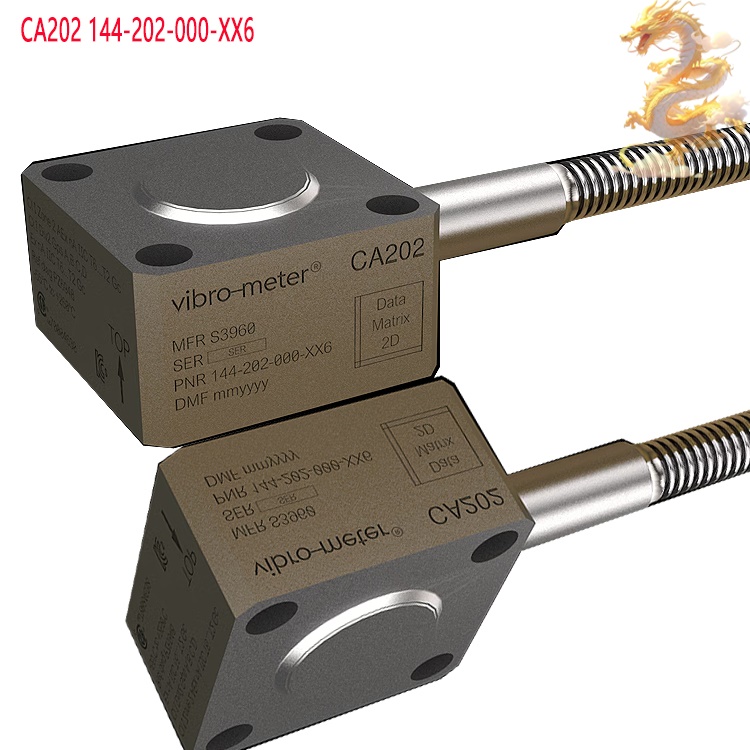
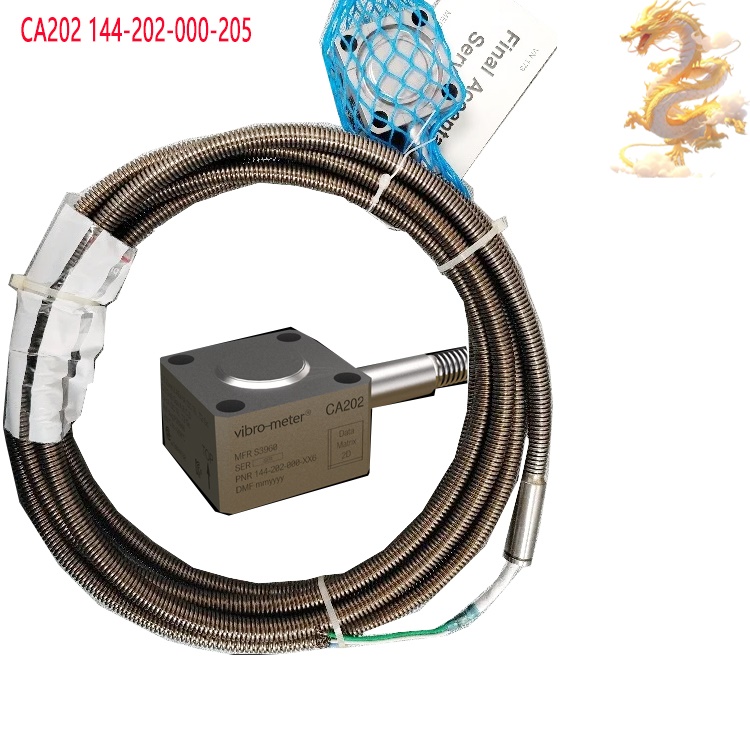
.jpg)
Many products are not yet listed. Please contact us for more product information.
If the product model differs from the displayed image, the model number shall prevail. Please contact us for specific product images; we will arrange to take photos in our warehouse for confirmation.
We have 76 shared warehouses worldwide, so it may sometimes take several hours to accurately return the information to you. We apologize for any inconvenience. Of course, we will respond to your inquiries as soon as possible.
The CP103 143-103-000-931 is an industrial-grade piezoelectric dynamic pressure sensor from Meggitt Vibro-Meter. It is designed for extreme conditions such as high temperature, strong vibration, explosion hazards, and nuclear radiation. Its core applications include combustion pulsation in gas turbine combustors and dynamic pressure monitoring in the primary loop of nuclear power plants. It outputs a charge signal and requires a charge amplifier (IPC704) to convert it into a standard voltage/current signal for acquisition. The core sensing element is a VC2 single-crystal piezoelectric crystal with a compression structure and extremely low acceleration sensitivity, significantly eliminating measurement interference caused by unit vibration. It supports long-term online monitoring and bench testing.
II.
Core Technical Parameters
1. Pressure Performance
Nominal Dynamic Measurement Range: 0.00004 ~ 20 bar
Upper Limit of Instantaneous Impact Overload: 250 bar
Sensitivity: 232 pC/bar (±5% @2Hz)
Linearity: Full range ±1% FS
Acceleration Sensitivity: ≤0.05 pC/g (Extremely strong resistance to vibration interference)
Resonant Frequency: >50 kHz
Frequency Response Range: 2 Hz ~ 10000 Hz (±5%)
2. Temperature Characteristics (Industry-leading wide temperature range)
Long-term Continuous Operation: -54℃ ~ +650℃
Short-term Limit Endurance: -196℃ (liquid nitrogen cryogenic) ~ +700℃
Housing Material: Inconel 600 high-temperature alloy, resistant to high-temperature oxidation and corrosion
3. Electrical and Structural Specifications
Output: Dual-core insulated charge output, no built-in power supply
.jpg)
Internal Insulation Resistance: ≥10⁹ Ω
Standard configuration: Mineral-insulated MI high-temperature cable; optional: LEMO aviation connector/high-temperature dedicated connector
Fully sealed welded housing, moisture-proof and resistant to media corrosion
Shock Resistance: 2000 g peak
Weight: Approx. 120g
4. Certifications
ATEX / IECEx explosion-proof certification, suitable for flammable and explosive gas environments
Nuclear Power Compliance: NRC Guide 1.20, IEEE 323 nuclear-grade standard, suitable for pressurized water reactors, boiling water reactors, and fast reactor primary circuits
CE Industrial Compliance
III.
Key Advantages
Ultra-wide Temperature Range: Covers temperatures from cryogenic liquid nitrogen to 650℃ combustion chamber temperatures in gas turbines; very few similar sensors achieve this. 650℃ Long-term operation;
Low vibration interference: Specially optimized structure to suppress acceleration response, ensuring data integrity even in high-vibration scenarios involving steam turbines and gas turbines;
Dual-scenario certification for nuclear power and gas turbines: Simultaneously meets the stringent standards of both major energy industries;
High overload tolerance: 250bar impact overload, far exceeding the 20bar range, resisting the instantaneous high-pressure impact of deflagration;
Long-term stability: Low temperature drift of the single-crystal VC2 piezoelectric crystal, suitable for uninterrupted online monitoring for several years.
IV.
Typical Application Scenarios
Heavy-duty Gas Turbines: Combustion chamber oscillation/pressure pulsation monitoring, gas turbine surge early warning, flame instability diagnosis, and supporting VM600 unit protection system;
Nuclear Power Plants: Dynamic pressure fluctuation monitoring of PWR/BWR/HTGR reactor primary cooling loop, resistance to gamma and neutron radiation;
Aero-engine Bench Testing: High-temperature combustion chamber dynamic pressure test, combustion noise spectrum analysis;
Petrochemical Explosion-proof Equipment: High-temperature process pipeline pulsation pressure monitoring, explosion-proof area pressure fluctuation detection.
V.
Supporting Acquisition System
Signal Conditioning: Must be paired with a Vibro-Meter IPC704 charge amplifier to convert pC charge signals to 0~10V/4-20mA;
Monitoring Host: VM600 Mechanical Equipment Protection System (CPU-M module), dedicated dynamic pressure acquisition channel;
Cable Selection: Original manufacturer mineral-insulated high-temperature cable; ordinary shielded cables cannot withstand operating conditions above 600℃.
VI.
Common Faults and Troubleshooting
Signal Drift, Baseline Offset
Causes: High-temperature aging of cables leading to decreased insulation, dampness at connectors, damaged insulation of charge amplifiers;
Troubleshooting: Offline measurement sensor insulation resistance<10⁹Ω indicates failure;
No Output Signal
Causes: High-temperature ablation of the probe, high-temperature failure of the piezoelectric crystal, broken MI cable;
High Vibration Interference Noise
Causes: Loose sensor installation, replacement of a standard piezoelectric sensor (excessive acceleration sensitivity);
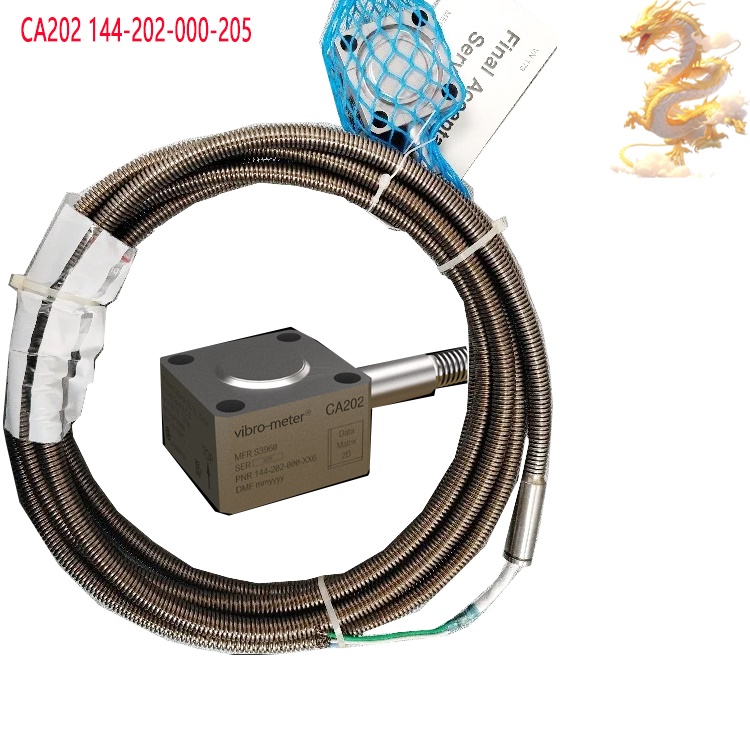
Sensitivity Attenuation at High Temperatures
Normal: Attenuation within the allowable range up to 650℃; rapid and significant drop indicates permanent crystal damage.
Vibro-Meter CP103 143-103-000-931 Piezoelectric Pressure Sensor: Real-World Application Cases
The CP103 143-103-000-931's core positioning: Long-term online monitoring of combustion pulsation and dynamic pressure under conditions of 650℃ high temperature, strong vibration, explosion-proof/nuclear radiation. It is paired with an IPC704 charge amplifier + VM600 unit monitoring system. The following are complete field cases in four major industries, including operating conditions, installation schemes, monitoring objectives, and pain points addressed.
I.
Heavy-Duty Gas Turbine Power Plants (Most Popular Mass Production
Application)
Case 1: European SGT5-4000F 400MW Combined Cycle Power Plant (Long-Term Online Protection)
Operating Environment: Continuous combustion gas temperature in the annular combustion chamber of 620~640℃, unit speed of 3000rpm, peak casing vibration of 80g, fuel is natural gas/hydrogen-blended mixture, ATEX Zone 0 explosion-proof.
Installation Configuration: Each gas turbine combustion chamber is circumferentially equipped with 8 CP103 143-103-000-931 cables, each with a 3m mineral-insulated MI high-temperature cable and a LEMO connector; installation torque is 18Nm; Inconel high-temperature threaded connectors are directly inserted into the combustion chamber wall, without bleed air cooling.
Signal Acquisition Link: CP103 143-103-000-931 charge output → IPC704 charge amplifier (rack) → VM600 condition monitoring system CPU-M module.
Monitoring Objectives:
Real-time capture of combustion oscillation thermoacoustic pulsations (20~500Hz low-frequency pressure fluctuations);
Surge precursor warning, low-NOx burner backfire monitoring;
Uneven combustion, localized knock diagnosis, preventing combustion chamber liner ablation.
The core reasons for choosing the CP103 143-103-000-931 sensor are: acceleration sensitivity ≤0.05pC/g, completely filtering out strong rotor vibration interference; stable operation at 650℃ for extended periods, requiring no water cooling; explosion-proof certification directly adapts to gas explosion-proof plants, replacing water-cooled induced draft sensors and significantly reducing pipeline maintenance.
Operating Results
No high-temperature drift for 5 consecutive years, with early warnings of 3 combustion oscillation faults, preventing large-scale damage and shutdowns in hot channels.
Case Study 2: Domestic GE LM2500 Distributed Gas Turbine Power Plant (Industrial Drive Unit)
Scenario: 25MW LM2500 gas turbine in a steel plant's self-owned power plant, co-firing blast furnace gas, combustion chamber peak temperature 630℃, medium containing sulfide corrosion.
Pain Points: Early ordinary piezoelectric sensors suffered from high-temperature sensitivity attenuation and vibration noise overwhelming the pressure signal; water-cooled probe pipelines frequently became scaled and clogged.
Solution 1: Six CP103 143-103-000-931 full-coverage combustion chambers, Inconel 600 hull resistant to sulfur corrosion, no cooling structure; VM600 real-time spectrum analysis of combustion pressure pulsation amplitude.
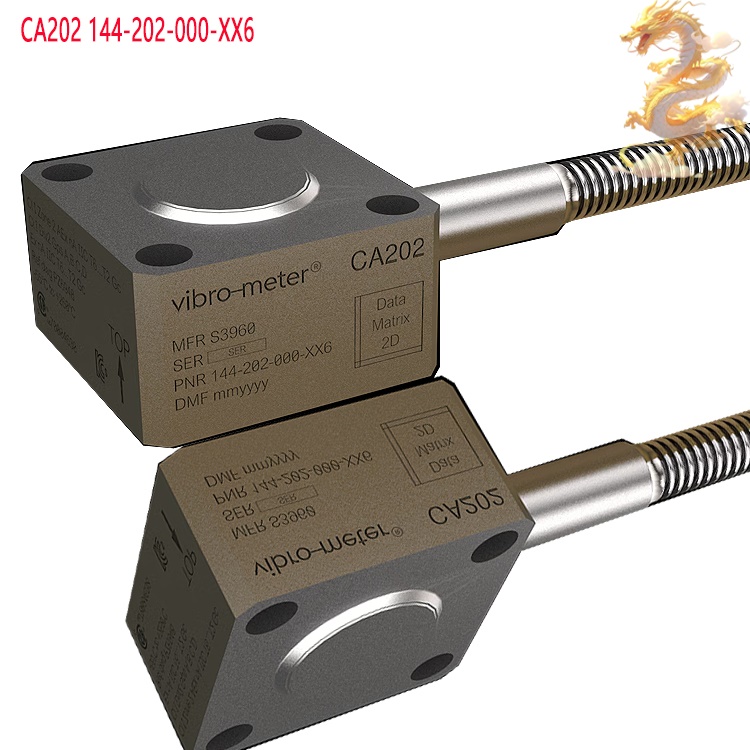
Value: Achieves stable monitoring of co-fired gas operation, reducing unplanned outages by two per year.
II.
Nuclear Power Plant Primary Cooling Loop Dynamic Pressure Monitoring
(Nuclear-Grade Certification Dedicated Model)
Case Study: European APWR Advanced Pressurized Water Reactor Unit (NRC Nuclear Compliance CP103 143-103-000-931 Nuclear Version)
Demanding Operating Conditions: Reactor primary cooling loop, high-temperature and high-pressure water medium, long-term 290~320℃, continuous gamma ion neutron radiation, 2000g seismic shock test.
Compliance Certification: Customized nuclear-grade CP103 143-103-000-931, meeting NRC Guide 1.20, IEEE 323 nuclear-grade seismic resistance and radiation aging tests. Installation Locations: 12 units (CP103 143-103-000-931) at the core outlet, pressurizer pulsation pipeline, and main circulation pump outlet. Monitoring loop fluid pressure pulsation, hydraulic vibration, and cavitation impact.
Monitoring Objectives:
Identify pressure oscillations caused by uneven coolant flow distribution;
Detect pipeline cavitation and valve throttling pulsation, predicting pipeline fatigue cracks;
Record dynamic pressure safety under seismic and transient conditions, meeting nuclear safety regulatory requirements.
Unique Advantages: VC2 single-crystal piezoelectric crystal is radiation-resistant, with sensitivity drift<3% after long-term irradiation; wide temperature coverage from reactor start-up and shutdown (-54℃ cold state) to steady-state high temperature (320℃), providing stable measurement across all operating conditions.
III.
Aero-engine/Gas Combustion Chamber Bench Test (R&D Testing
Scenario)
Case Study: Domestic CJ-1000A High-Bypass Aero-engine High-Temperature Combustion Chamber Test Bench
Test Conditions: Simulating a real cruise combustor wall temperature of 650℃, short-time ignition impact of 700℃, instantaneous ignition impact pressure of 250 bar, and high-amplitude vibration impact.
Layout: Ten CP103 143-103-000-931 amplifiers are arranged at the combustor head, flame tube, and outlet section, paired with multi-channel IPC704 charge amplifiers, connected to a high-speed data acquisition system.
Test Content:
1) Staged premixed combustion pressure pulsation spectrum analysis;
2) Lean fuel flameout boundary and oscillating combustion limit calibration;
3) Acquisition of instantaneous ignition deflagration impact pressure;
4) Comparative test of combustion stability of different fuels (kerosene/hydrogen).
IV.
High-Temperature Process Pipeline Pulsation Monitoring in Petrochemical
Explosion-Proof Systems (Explosion-Proof Industrial Scenarios)
Case Study: High-Temperature Reaction Pipeline of Hydrogenation Unit in a Middle Eastern Refinery
Operating Conditions: The medium in the outlet pipeline of the hydrogenation reactor is 380~550℃, in a flammable and explosive hydrogen environment (ATEX Ex ia explosion-proof zone). Valve throttling generates high-frequency pressure pulsations.
Monitoring Requirements: Monitor pipeline fluid vibration pulsations to prevent pipeline resonance fatigue cracking; monitor uneven gas flow fluctuations in the catalyst bed.
Implementation Solution: Explosion-proof CP103 143-103-000-931 intrinsically safe sensor, directly mounted on the pressure tap on the outer wall of the process pipeline, MI high-temperature resistant cable connected to the IPC704 conditioner in the control room via an explosion-proof sealed connector.
Solution: Ordinary ceramic piezoelectric sensors fail rapidly above 500℃, while the CP103 143-103-000-931 maintains stable online operation at 550℃ for extended periods. Explosion-proof certification requires no additional explosion-proof housing.
V.
General Configuration of Supporting Systems (Standard Link for All
Cases)
Frontend: CP103 143-103-000-931 Piezoelectric Charge Pressure Sensor (MI High-Temperature Integrated Cable)
Signal Conditioning: Vibro-Meter IPC704 Dedicated Charge Amplifier (Explosion-proof Rack Version Optional)
Monitoring Host: VM600 Mechanical Equipment Protection System (CPU-M Dynamic Pressure Acquisition Card)
Upper-Level Software: Meggitt VibroSight Spectrum Analysis, Trend Alarm, Fault Diagnosis
VI. Summary of the Irreplaceable Core Characteristics of the CP103 143-103-000-931 in Various Cases
Ultra-Wide Stable Temperature Range: -54~650℃ for long-term continuous operation, short-term 700℃, no water cooling/bleed air required;
Ultra-Low Vibration Interference: ≤0.05pC/g acceleration sensitivity, pure signal in strong vibration environments of rotating equipment;
High Overload Tolerance: 250bar Instantaneous impact resistance, withstands ignition and deflagration high-pressure impacts;
Dual certification compatibility: Simultaneously supports ATEX explosion-proof and nuclear-grade NRC/IEEE radiation and shock resistance certifications, covering the two most demanding energy industries;
Long-term stability: VC2 single-crystal piezoelectric, with minimal online sensitivity drift over several years, eliminating the need for frequent calibration in power plants/nuclear power plants.
Recommended
related products:
CP103
143-103-000-751
CP103
143-103-000-741
CP103
143-103-000-732
CP103
143-103-000-731
CP103
143-103-000-712
CP103
143-103-000-702
CP103
143-103-000-701
CP103
143-103-000-642
CP103
143-103-000-632
CP103
143-103-000-612
CP103
143-103-000-602
CP103
143-103-000-542
CP103
143-103-000-542
CP103
143-103-000-532
CE31X
444-311-000-302
CE31X
444-311-000-213
CE31X
444-311-000-212
CE31X
444-311-000-203
CE31X
444-311-000-123
CE31X
444-311-000-202
CE31X
444-311-000-122
CE31X
444-311-000-113
CE31X
444-311-000-112
CE31X
444-311-000-301
CE28X
444-281-000-213
More......
PRODUCT TAGS
RELATED PRODUCTS
PLC Dragon Automation
Address: Wanda Plaza, Chengdu, Sichuan Province
Google email: wkcarshop666888@gmail.com
Industrial Control Sales Consultant: Amelia
Whatsapp: +86 18030295882
12A3256BC9DA41BAB264DB676273DA32.png)


3BE7E049824E4F11BE61AD65D86DFEBD.png)