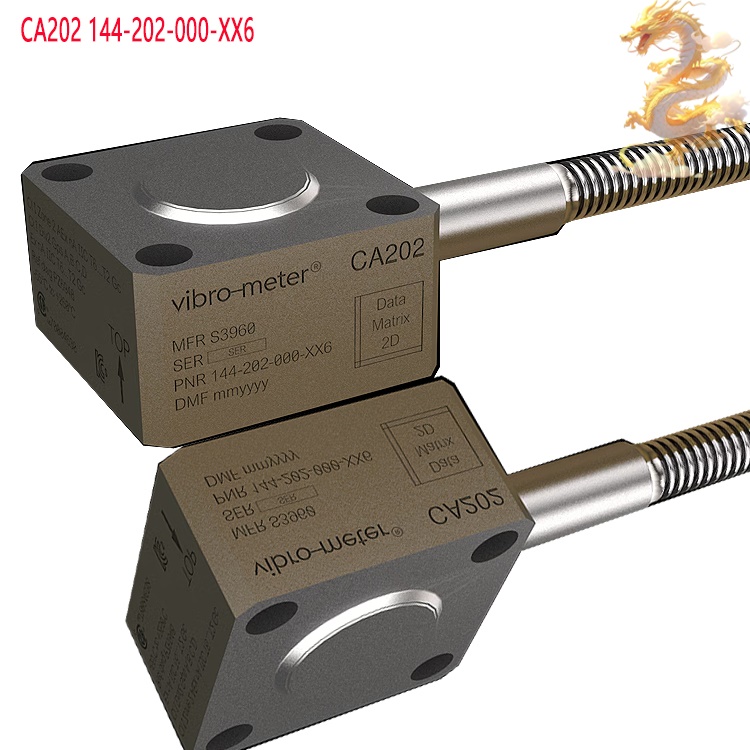
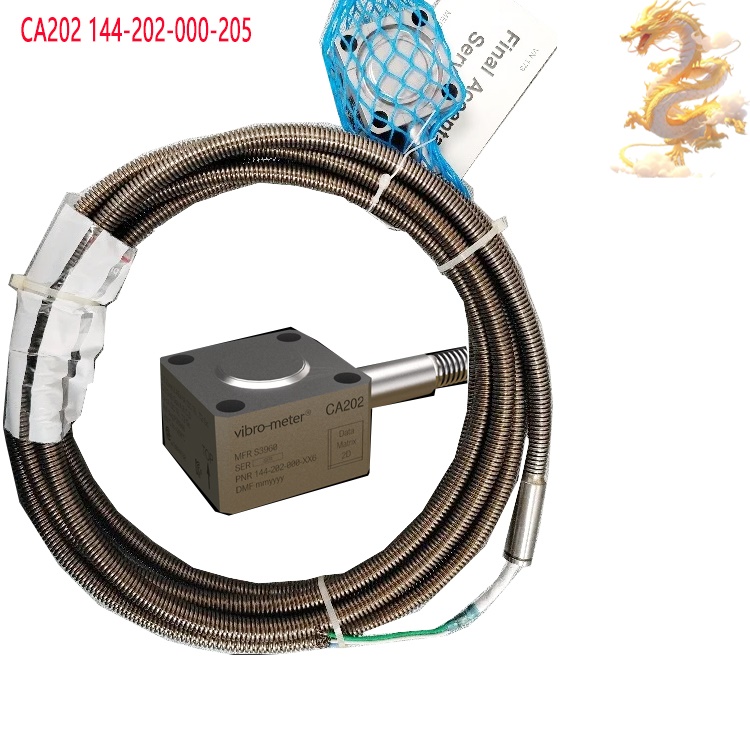
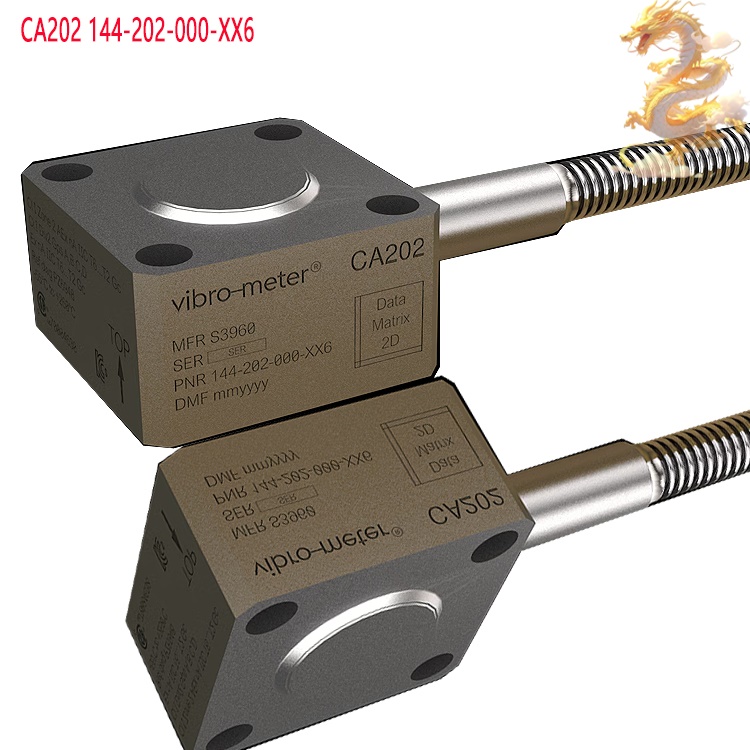
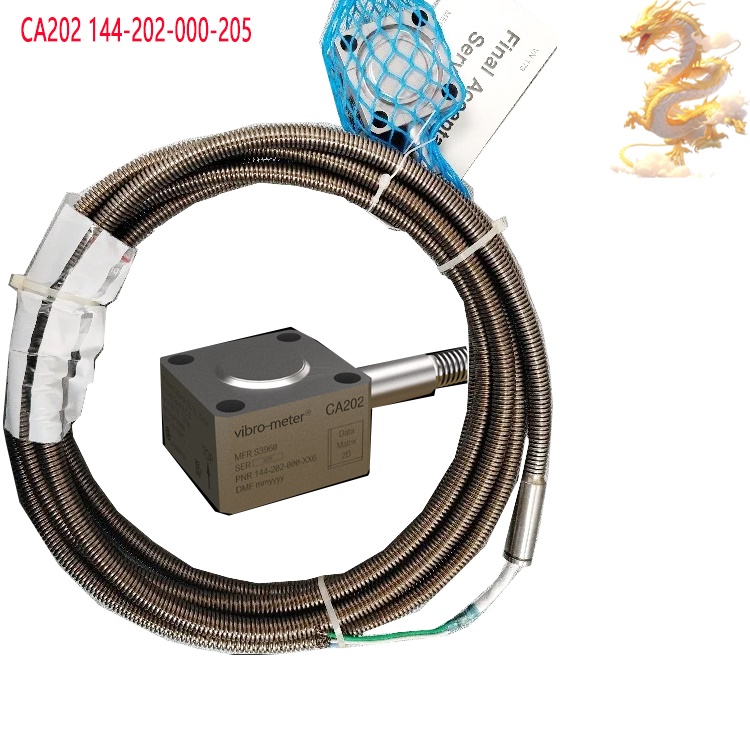
144-303-000-381 Vibro-Meter Gear Turbine Accelerometer Vibration Tester
Built-in Fast Fourier Transform (FFT) spectrum analysis capability can convert time-domain vibration signals into frequency-domain signals, distinguishing the vibration amplitude of different frequency components. It supports multi-band spectrum analysis, including low-frequency 200 Hz, mid-frequency 1600 Hz, and high-frequency 10,000 Hz, as well as demodulated spectrum analysis from 1 Hz to 20 kHz, facilitating the precise location of characteristic frequencies and fault sidebands in gearbox and turbine systems.
.jpg)
Many products are not yet listed. Please contact us for more product information.
If the product model differs from the displayed image, the model number shall prevail. Please contact us for specific product images; we will arrange to take photos in our warehouse for confirmation.
We have 76 shared warehouses worldwide, so it may sometimes take several hours to accurately return the information to you. We apologize for the inconvenience. Of course, we will respond to your inquiries as soon as possible.
144-303-000-381 The Vibro-Meter Gear Turbine Accelerometer Vibration Tester is a specialized vibration monitoring device launched by the Swiss company Vibro-Meter, primarily for vibration detection and fault diagnosis of gearboxes and turbine machinery. This instrument has accumulated over thirty years of technical experience in the field of piezoelectric accelerometers.
Core Functions
I. Vibration Parameter Measurement Function. The instrument can simultaneously measure three major parameters: vibration acceleration, vibration velocity, and vibration displacement. The acceleration measurement range typically covers 0.1 to 199.9 m/s², the velocity measurement range covers 0.1 to 1999.9 mm/s RMS, and the displacement measurement range covers 0.001 to 1.999 mm/s peak-to-peak. The measurement error is controlled within ±5%. The acceleration frequency response range is 10 Hz to 15 kHz, and the velocity and displacement frequency response range is 10 Hz to 1 kHz, suitable for capturing the vibration characteristics of high-frequency rotating machinery such as gears and turbines.
II. Gear and Bearing Fault Diagnosis Function. This instrument is specifically designed for gear and turbine operating conditions and can assess gear meshing status and bearing health through high-frequency acceleration measurement. It supports bearing condition monitoring and can output BG and BV values, representing the effective values of high-frequency vibration acceleration and vibration velocity, respectively, for automatically determining bearing alarm status. It can also identify gear meshing frequency and its sideband characteristics to determine fault types such as gear wear, poor meshing, and broken teeth.
III. Spectrum Analysis Function. Built-in Fast Fourier Transform (FFT) spectrum analysis capability can convert time-domain vibration signals into frequency-domain signals, distinguishing the vibration amplitude of different frequency components. Supports multi-band spectrum analysis including low-frequency 200Hz, mid-frequency 1600Hz, and high-frequency 10,000Hz, as well as demodulated spectrum analysis from 1 kHz to 20 kHz, facilitating precise location of characteristic frequencies and fault sidebands in gearbox and turbine systems.
.jpg)
IV. Standard Evaluation and Alarm Functions. The instrument incorporates ISO 10816 vibration evaluation standards and ISO 2372 vibration intensity standards, automatically comparing measured values with standard thresholds to indicate the equipment's operational health status using levels such as good, caution, and danger. Users can customize alarm thresholds within the full-scale range for automatic over-limit alarms.
V. Multi-Axis Sensing and Data Management Functions. Supports simultaneous measurement in three axes (X, Y, and Z), comprehensively capturing the vibration characteristics of gears and turbines in all directions. Built-in data storage allows for the saving of numerous measurement records, supporting data playback and trend analysis for long-term operational status tracking and fault evolution assessment.
VI. Field Applicability Functions. The entire unit features a lightweight design, typically weighing around 300 grams. Equipped with a backlit LCD screen, it is suitable for on-site inspections and patrols. A built-in rechargeable lithium battery provides over 20 hours of continuous operation. It includes automatic shutdown and low battery indicator functions, is adaptable to harsh industrial environments, and boasts an IP65 or higher protection rating.
VII. Expansion Interface Function: Supports USB data transfer; some models are equipped with Bluetooth wireless connectivity, allowing measurement data to be synchronized to professional analysis software on mobile phones or computers, enabling remote monitoring and data sharing to meet predictive maintenance needs.
VI. Data Recording and Storage: Features large-capacity data storage, saving historical measurement records and supporting data playback and trend analysis. This facilitates tracking equipment vibration trends and provides a basis for predictive maintenance.
VII. Infrared Temperature Measurement Function: Some configurations integrate non-contact infrared temperature measurement, acquiring equipment surface temperature simultaneously with vibration detection to aid in identifying complex faults such as poor lubrication or overheating.
VIII. Multi-channel Synchronous Acquisition: Supports simultaneous dual-channel or multi-channel measurement, allowing simultaneous acquisition of vibration data from different measuring points on the gearbox for comparative and phase analysis.
IX. Portable Design and Field Applicability. The unit is lightweight and compact, with a built-in rechargeable lithium battery providing long battery life. It features automatic shutdown, low battery indicator, and backlight display, making it suitable for industrial field inspections, spot checks, and acceptance testing.
X. Data Output and Connectivity. Supports data transmission via USB and Bluetooth, allowing measurement data to be exported to a computer or mobile phone for further analysis and processing. It can also be connected to industrial control systems such as PLCs.
In summary, the 144-303-000-381 Vibro-Meter gear turbine accelerometer vibration tester is a dedicated portable instrument integrating vibration measurement, gear and bearing fault diagnosis, spectrum analysis, standard evaluation, and data management. It primarily serves the condition monitoring and predictive maintenance of rotating machinery such as gearboxes, turbine units, fans, and motors.
Recommended
related products:
144-303-000-311
CA30X
144-303-000-291
CA30X
144-303-000-281
CA30X
144-303-000-271
CA30X
144-303-000-261
CA30X
144-303-000-251
CA30X
144-303-000-241
CA30X
144-303-000-231
CA30X
144-303-000-221
CA30X
144-303-000-211
CA30X
CA28X
144-280-000-115
CA28X
144-280-000-111
More......
PRODUCT TAGS
RELATED PRODUCTS
PLC Dragon Automation
Address: Wanda Plaza, Chengdu, Sichuan Province
Google email: wkcarshop666888@gmail.com
Industrial Control Sales Consultant: Amelia
Whatsapp: +86 18030295882
12A3256BC9DA41BAB264DB676273DA32.png)


3BE7E049824E4F11BE61AD65D86DFEBD.png)