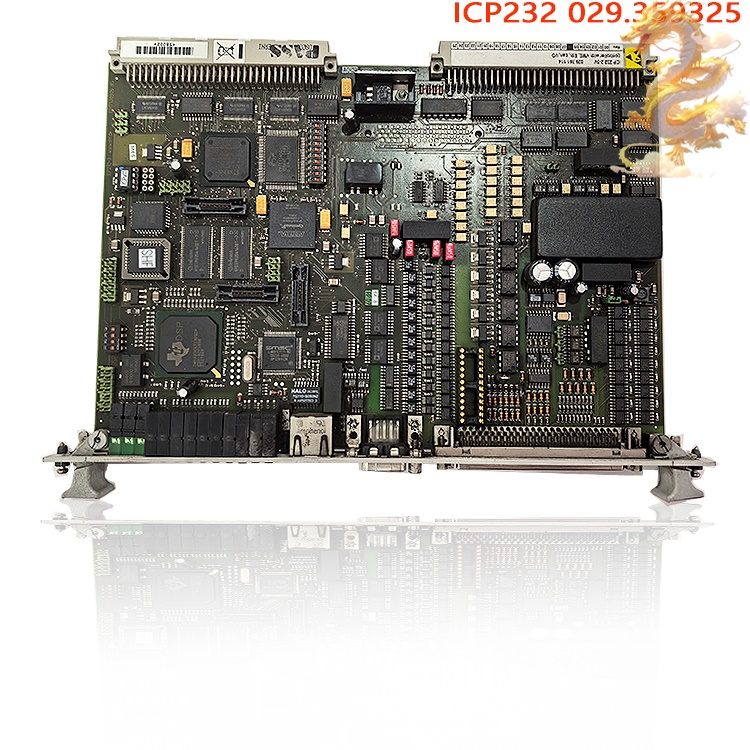
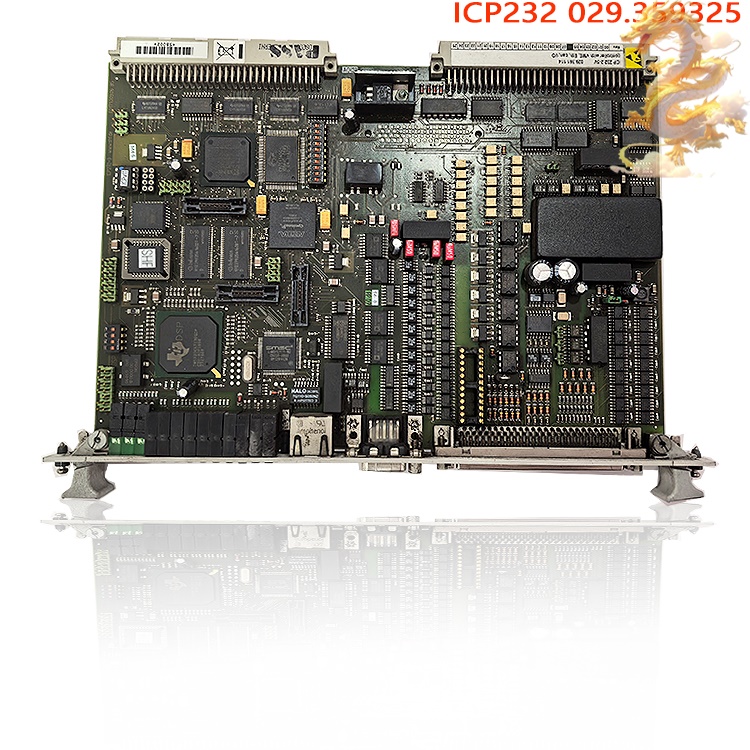
ALSTOM | SPU232.1-CAN | Logic Operation Module | SPU232.1-CAN
This board integrates a dual-mode communication architecture supporting both CAN bus and RS-232, combining capabilities such as data logic processing, bidirectional protocol conversion, real-time signal acquisition, and device control. Characterized by wide-temperature adaptability, robust interference resistance, and high stability, it serves as a core component for upgrading legacy industrial equipment and constructing distributed control systems. This article provides a comprehensive analysis of the SPU232.1-CAN embedded board—covering its core principles, practical usage, safety guidelines, target industries, and key advantages—with content professionally verified to ensure accuracy for industrial equipment selection and operations and maintenance.
.jpg)
.jpg)
All products on this site are specialized items subject to market price fluctuations.
Please rely on the quote provided by customer service for the actual price, as the listed price is not definitive.
Before placing an order, please confirm details such as the model, product specifications, and pricing with customer service.
Please contact customer service for inquiries regarding these units.
SPU232.1-CAN
Alternative Names:
Single Processor Unit SPU232.1-CAN
SPU232.1-CAN Embedded Board
The
SPU232.1-CAN is an industrial-grade embedded control and
communication board jointly developed through the iterative efforts
of Alstom and GE. It
serves as a core functional module in fields such as industrial control systems,
rail transit, and the energy and power sectors. The board
integrates a dual-mode communication architecture supporting both CAN bus and
RS-232, offering capabilities for data logic processing, bidirectional protocol
conversion, real-time signal acquisition, and equipment control. Characterized
by wide-temperature adaptability, strong anti-interference capabilities, and
high stability, it is a key component for upgrading legacy industrial equipment
and constructing distributed control systems. This article provides a
comprehensive analysis of the SPU232.1-CAN embedded board, covering its core
principles, operational methods, safety standards, applicable industries, and
key advantages. The content has been technically verified to serve as an
accurate reference for product selection and O&M in industrial
applications.
I. Core Operating Principles of the SPU232.1-CAN Embedded Board
The SPU232.1-CAN embedded board is built around a high-performance industrial-grade microprocessor and integrates an independent CAN controller, an RS-232 transceiver, and opto-isolation circuitry. Utilizing a modular architecture, it executes a fully closed-loop workflow encompassing data acquisition, protocol conversion, logic processing, command output, and status self-diagnosis. Its core operation follows industrial real-time control standards and comprises five key stages:
1. Power-on Initialization and Self-diagnosis
Upon connection to a compliant power source, the board automatically initiates a low-level self-diagnosis routine. It sequentially verifies the operational status of the core processor, communication interfaces, data buffers, and isolation circuits to detect hardware faults or wiring anomalies. Successful completion of the self-test triggers the automatic loading of preset communication parameters and logic control rules, transitioning the board to a standby monitoring state; conversely, any detected faults immediately illuminate the panel's fault indicator and generate a log entry.
2. Signal Acquisition and Level Conversion
The board supports the input of industrial digital switch signals and standard analog signals, enabling connectivity with a wide range of sensors, actuators, and industrial control equipment. Built-in transceivers facilitate bidirectional conversion between industrial field analog signals and the board's digital signals. Simultaneously, opto-isolation modules block interference, protecting core circuitry from damage caused by high voltage or electromagnetic pulses and ensuring signal acquisition integrity.
3. Dual-mode Protocol Conversion and Data Processing
A primary function of the board is the bidirectional, transparent conversion between CAN 2.0A/B and RS-232 protocols. It can convert ASCII data from RS-232 devices into binary data frames for the CAN bus and perform the reverse process (protocol parsing), effectively resolving communication incompatibility issues between legacy and modern equipment in industrial environments. It incorporates a data validation mechanism that filters out erroneous data using CAN frame CRC checks and RS-232 parity checks; a built-in large-capacity buffer temporarily stores peak data to prevent data loss.
4. Logic Processing and Command Output
The board features an industrial-grade logic processing unit that supports basic logic operations (AND, OR, NOT, XOR) as well as timing, counting, and sequence control functions, enabling autonomous decision-making for industrial equipment coordination. For example, in power systems, it can automatically issue trip or protection-lock commands upon detecting line overcurrent or overload signals; in rail transit applications, it verifies track occupancy signals in real-time to trigger switch locking and signal light switching, eliminating the need for secondary processing by a host computer.
.jpg)
5. Real-time Status Monitoring and Self-healing
During operation, the board continuously monitors supply voltage, operating temperature, communication link status, and data error rates, while supporting heartbeat-based link monitoring. Upon detecting issues such as bus collisions, signal interruptions, or voltage anomalies, it immediately triggers alarms, buffers fault data, and initiates protective mechanisms to ensure stable control system operation and mitigate the risk of equipment downtime.
II.
Standard Usage of the SPU232.1-CAN Embedded Board
The SPU232.1-CAN board features a standardized industrial design supporting both DIN-rail and cabinet screw mounting; it is compatible with standard 19-inch industrial cabinets, ensuring a standardized and easily implementable workflow. Specific usage steps are as follows:
1. Preliminary Preparation and Model Verification
Before
use, verify the board model and part number (e.g., SPU232.1-CAN ) to ensure
compatibility with the control system. Prepare a 24V regulated industrial power
supply, shielded twisted-pair cables, dedicated terminal blocks, and the
corresponding host-side configuration software. Ensure the installation
environment is free from severe corrosion, dust accumulation, and sources of
high-frequency electromagnetic interference.
2. Hardware
Installation and Mounting
Method 1 (DIN Rail Mounting): Snap the board's mounting clip onto a standard industrial DIN rail and press firmly to ensure a secure fit without looseness. Method 2 (Cabinet Mounting): Tighten the mounting screws using a standard torque of 0.5–0.8 N·m; avoid overtightening, which could damage the casing, or undertightening, which could lead to vibration or displacement. Maintain a safety clearance of at least 10 cm between the installation site and sources of heat or interference, such as high-power motors, variable frequency drives (VFDs), or heaters.
3. Proper Wiring Procedures
Perform all wiring operations while the power is disconnected. Strictly distinguish between power supply, CAN bus, and RS-232 interface pin assignments to prevent polarity reversal or signal interface misconnection. Use shielded twisted-pair cabling for the CAN bus and install 120Ω terminal resistors at both ends of the bus; limit the cable length to 1,000 meters or less for 1 Mbps high-speed communication. Follow the standard three-pin wiring convention for the RS-232 interface (TXD for transmit, RXD for receive, and DGND for ground) and ensure all connections are secure and free of loose contacts. After wiring, inspect the connections to verify there are no short circuits or incorrect wiring.
4. Power-up Configuration and Parameter Debugging
Connect a regulated 24V (±20%) industrial power supply. Once the board completes its power-on self-test, connect it to the host computer software via the RS-232 interface. Configure key parameters based on application requirements, such as CAN communication rate (adjustable from 5 kbps to 1 Mbps), RS-232 baud rate (adjustable from 300 bps to 115,200 bps), data parity/checksum method, protocol conversion rules, and alarm thresholds. Save the configuration locally so that settings are retained after power-off; the board will load these parameters upon reboot. 5. Trial Operation and Functional Verification
Initiate the system trial run and observe the status of the panel indicator lights: a steady power light indicates normal power supply; flashing CAN/RS-232 signal lights indicate normal communication; and an extinguished fault light indicates no equipment anomalies. Monitor data transmission status via the host computer to verify the proper functioning of protocol conversion, logic control, and signal acquisition. Once it is confirmed that there are no issues such as data packet loss, command latency, or false triggering, the system may be put into formal operation.
III.
Precautions for Using the SPU232.1-CAN Embedded Board (Safety &
Maintenance)
As an industrial core control board, the SPU232.1-CAN is used in demanding environments. Industrial usage standards must be strictly followed to prevent hardware damage, system failures, and safety hazards. Key precautions are categorized into four main areas:
.jpg)
1. Electrical Safety Precautions
Strictly prohibit hot-plugging wiring or communication cables and modifying configuration parameters while the device is powered on; this prevents current surges from burning out interfaces or causing bus data conflicts. The power supply must be an industrial regulated power source equipped with over-current and over-voltage protection; strictly maintain the voltage within the 19.2V–28.8V range and prevent voltage spikes or drops. The board features 2500V DC isolation protection between the power and signal terminals; unauthorized disassembly of the isolation circuitry or modification of hardware wiring is strictly prohibited.
2. Installation Environment Specifications
Maintain
the operating temperature between -40°C and +85°C, avoiding prolonged operation
outside this range. Control relative humidity between 10% and 95%
(non-condensing); do not use the device in environments with high humidity,
condensation, or corrosive gases. Keep the device away from strong
electromagnetic interference sources such as variable frequency drives (VFDs),
high-frequency equipment, and high-power motors. Route power lines and signal
lines separately to minimize electromagnetic interference.
3.
Routine Maintenance and Troubleshooting
Perform regular monthly inspections: check for loose wiring terminals, verify indicator light status, and inspect the casing for dust accumulation. Use a dry, soft cloth to clean off dust; the use of water, alcohol, or other corrosive cleaning agents is strictly prohibited. Conduct a comprehensive functional test every six months to verify communication rates, data error rates, and anti-interference performance, ensuring equipment stability. If a fault indicator lights up, prioritize checking the power supply, wiring, and terminal resistor configuration; use a host computer to read fault logs to pinpoint the issue. Unauthorized disassembly or repair of the board is prohibited; maintenance must be performed by authorized professional personnel.
4. Storage and Idle Equipment Guidelines
Boards that are idle for extended periods must be placed in anti-static bags and stored in a dry, well-ventilated, and non-corrosive environment. The storage temperature range is -55°C to +100°C; avoid direct sunlight, severe vibration, and physical impact. Before reactivation, the board must undergo a power-on self-test and parameter calibration; ensure there is no hardware damage and that functions are normal before putting it back into service.
IV.
Key Application Industries for the SPU232.1-CAN Embedded Board
Leveraging features such as wide-temperature adaptability, strong anti-interference capabilities, protocol compatibility, and highly reliable real-time control, the SPU232.1-CAN board targets core industrial scenarios requiring high reliability and safety. Key application industries include:
1. Rail Transit Industry
Serving
as the core logic processing module for high-speed rail and subway signaling
control systems, it is used for switch control, signal light interlocking, track
occupancy detection, and train position signal acquisition. It performs
real-time safety logic assessments to isolate faulty sections and prevent
operational conflicts, while also facilitating data exchange between onboard
equipment and ground-based maintenance systems, thereby ensuring operational
safety and scheduling precision in rail transit.
2. Power
Automation Industry
Widely used in substation relay protection systems, power grid monitoring equipment, and distribution automation terminals. It handles the acquisition and logical analysis of signals such as line current, voltage, and overload conditions, automatically triggering commands for circuit breaker tripping, line protection, and fault isolation. Simultaneously, it uploads grid operational data to SCADA monitoring platforms, enhancing capabilities for automated grid O&M and fault handling.
3. Intelligent Manufacturing and Industrial Automation
Suitable for automotive manufacturing, electronics assembly, and machining production lines. It acts as a communication bridge between legacy and modern equipment, connecting RS-232 sensors and barcode scanners with CAN-bus PLCs and industrial robot systems. This enables real-time production data acquisition, coordinated equipment control, and production line status monitoring, effectively solving communication compatibility challenges associated with upgrading legacy equipment.
4. Energy and Chemical Industry
Applied in monitoring systems for oil extraction, natural gas transmission, and chemical production. It interfaces with industrial instruments—such as flow meters, level gauges, and pressure sensors—to acquire real-time operational parameters, perform data protocol conversion, and handle remote data uploads. It also receives control commands from central platforms to enable automated management of chemical equipment, while remaining compatible with harsh industrial environments characterized by flammable/explosive materials and high electromagnetic interference.
5. Intelligent Warehousing and IoT Monitoring
Used
in Automated Guided Vehicle (AGV) systems and automated high-bay warehouse
control systems to facilitate data exchange between warehousing equipment and
management systems, enabling functions such as path planning, cargo handling,
and equipment status feedback. It is also suitable for outdoor environmental
monitoring and smart agricultural equipment, enabling data acquisition and
transmission control for various types of sensor devices.
V. Core Competitive Advantages of the SPU232.1-CAN Embedded Board
Compared to standard serial interface boards or single-protocol communication modules, the SPU232.1-CAN embedded board is purpose-built for demanding industrial environments. It offers outstanding core advantages, making it an ideal solution for integrating industrial control and communication:
1. Dual-Mode Protocol Compatibility and High Adaptability
It integrates CAN bus and RS-232 dual-communication architectures and supports bidirectional, transparent protocol conversion. Eliminating the need for additional protocol conversion modules, it ensures seamless compatibility between new and legacy industrial equipment. This significantly reduces upgrade and retrofit costs for aging production lines and control systems while adapting to the vast majority of industrial control scenarios.
2. Industrial-Grade Reliability and Superior Interference Immunity
Built with military-grade components and certified to EN 61000 industrial electromagnetic compatibility (EMC) standards, the board features multiple built-in protection mechanisms, including optical isolation, surge protection, and safeguards against short circuits, overvoltage, and overcurrent. It has passed rigorous testing for thermal cycling (high/low temperatures), vibration and shock, as well as dust and moisture resistance. It ensures stable, long-term operation in extreme temperatures (-40°C to +85°C), high-dust environments, and areas with strong electromagnetic interference, maintaining an exceptionally low failure rate.
3. High Integration: Combining Control and Communication Functions
Unlike
standard communication conversion boards, the SPU232.1-CAN features an independent
logic processing unit. It can autonomously execute industrial logic operations,
timing and counting functions, and coordinated equipment control without relying
on a host computer or PLC. This simplifies system architecture, reduces the need
for peripheral components, saves cabinet installation space, and enhances system
response speed.
4. High real-time performance and stable data
transmission
Equipped with a high-speed microprocessor, the device achieves data processing rates of up to 1 Mbps and supports data prioritization, ensuring urgent control commands are processed first. It features multi-level data buffering combined with dual CRC and parity check mechanisms to effectively prevent data loss during traffic spikes and transmission errors, guaranteeing millisecond-level response times for industrial control commands.
5. Easy installation and maintenance; high cost-performance ratio
Designed with standardized industrial dimensions, the unit supports both DIN-rail and rack mounting, making it compatible with standard industrial cabinets. Visual LED indicators provide clear status updates on operation, communication, and faults, while user-friendly configuration software streamlines parameter tuning and troubleshooting. With a long service life and low maintenance costs, the device offers a superior lifecycle cost-performance ratio compared to similar products.
6. Robust safety and redundancy; suitable for critical applications
The device includes built-in real-time self-diagnostics, fault alarms, data logging, and link self-healing capabilities. With comprehensive safety protection mechanisms, it meets the stringent reliability and safety requirements of critical sectors—such as rail transit and power grids—ensuring zero major system failures during operation.
7.Related product examples
ICP232-8DI/8DO: 8 digital inputs + 8 relay outputs, suitable for small and medium-sized control scenarios.
ICP232-16DI/16DO: 16 digital inputs + 16 transistor outputs, supports high-speed pulse control.
ICP232-ETH: Integrated Ethernet interface, supports remote programming and diagnosis.
Related
product recommendations:
MVR1600-4601
MVR1600-4601-A
IS400WNPSH1A
IS400WNPSH1ACB
IS40yTVBAH2B
IS410JPDHG1A
IS400JPDHG1ABB
IS400SRLYS2ABB
IS400STAIS2AED
IS400STAIS2AED
IS400SRLYS2ABB
IS400STCIS2AFF
IS400STCIS2AFF
more......
PRODUCT TAGS
RELATED PRODUCTS
PLC Dragon Automation
Address: Wanda Plaza, Chengdu, Sichuan Province
Google email: wkcarshop666888@gmail.com
Industrial Control Sales Consultant: Amelia
Whatsapp: +86 18030295882
12A3256BC9DA41BAB264DB676273DA32.png)


3BE7E049824E4F11BE61AD65D86DFEBD.png)


.jpg)