IS420YAICS1B Local Pack DC Power Distribution Board GE IS420YAICS1B
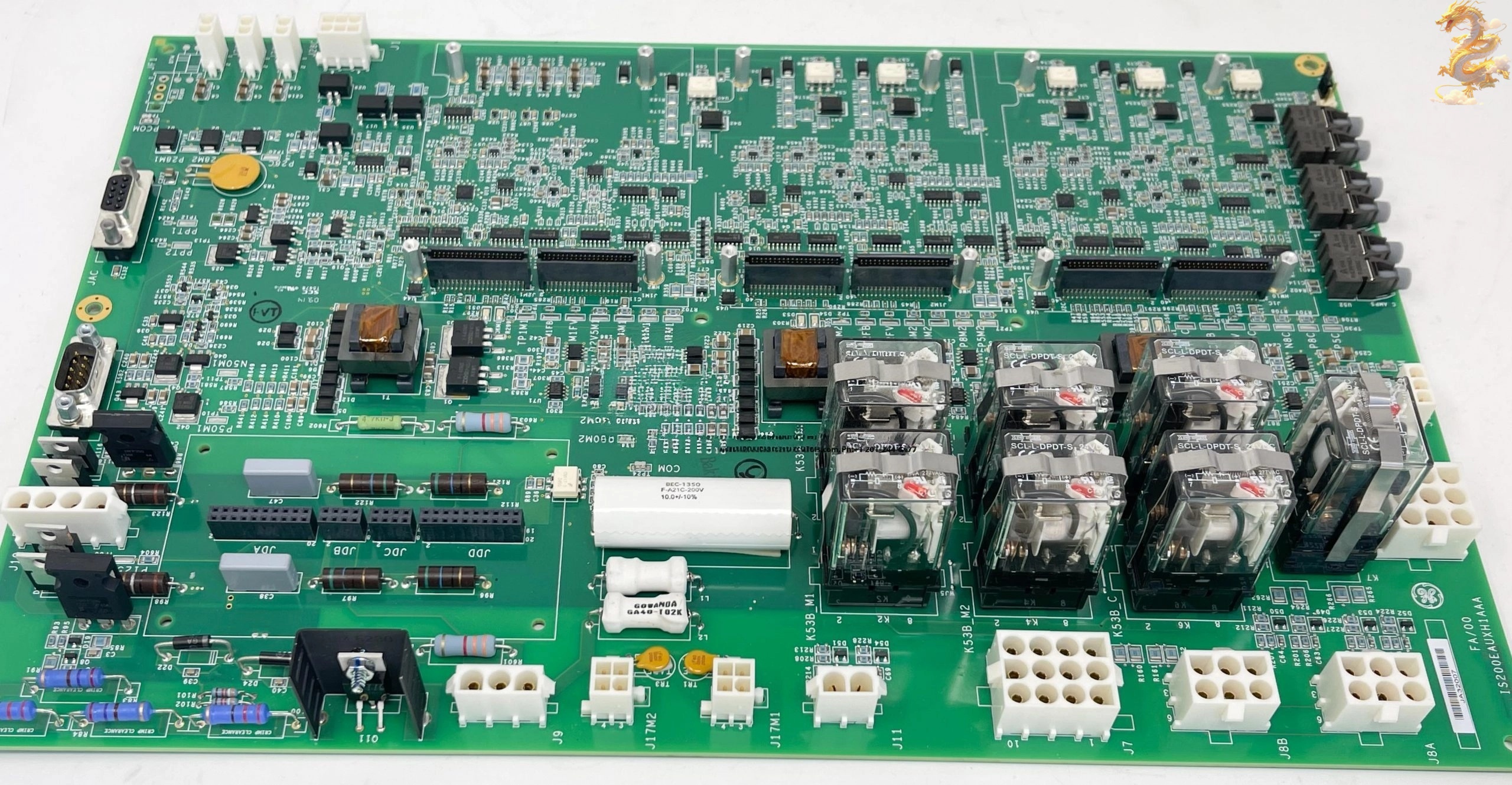
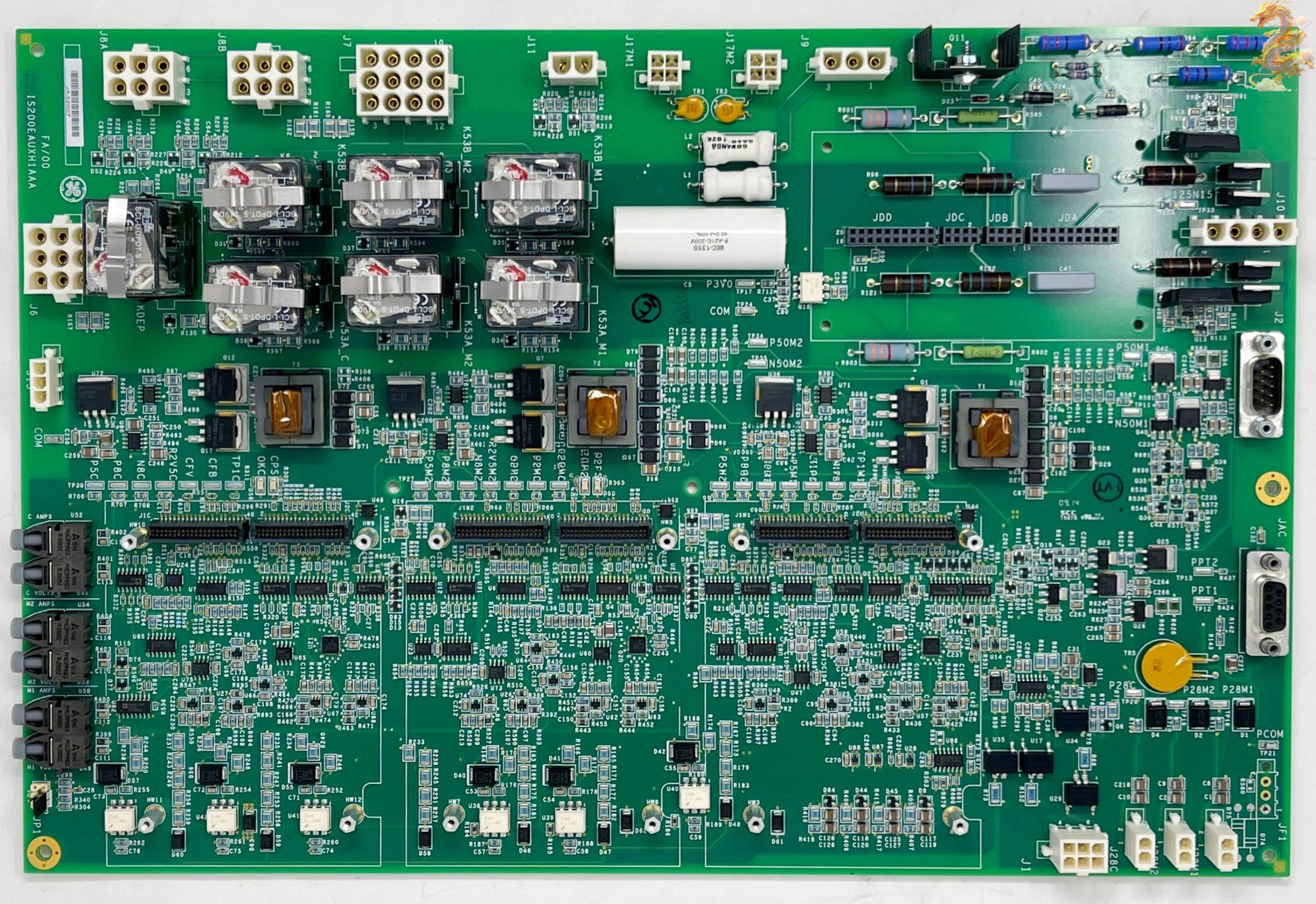
The core function of this module is to stably and reliably distribute DC power—sourced from the cabinet's main power supply or backplane—to the system's I/O packs, actuator interfaces, and field-mounted components, thereby providing a clean power supply for the real-time data acquisition, processing, and actuation functions of the turbine control system. Its design facilitates power distribution directly to field components, resulting in shorter cable runs, reduced power loss, and a compact footprint that supports high-density cabinet layouts.
.jpg)
All products on this website are specialized items subject to fluctuating market prices.
Please rely on the quote provided by customer service, as the listed prices are not definitive.
Before placing an order, please confirm details such as the model, product specifications, and price with customer service.
New units are available for sale; please contact customer service for details.
IS420YAICS1B
Alternative Names:
Power Distribution Board IS420YAICS1B
IS420YAICS1B Servo Control Board
I.
Product Overview
The GE IS420YAICS1B is a Local Pack DC Power Distribution Board used in the Mark VI / Mark VIe (IS200 platform) control systems for gas and steam turbines—part of the Speedtronic series from General Electric (GE). It belongs to the GE Mark VI IS200 printed circuit board family and serves as a critical link in the power management chain of the Distributed Control System (DCS).
The
module's primary function is to stably and reliably distribute DC power—sourced
from the cabinet's main power supply or backplane—to I/O packs, actuator
interfaces, and field-mounted components. It provides a clean power supply
foundation for the real-time data acquisition, processing, and actuation
functions of the turbine control system. The IS420YAICS1B is a low-channel-count
(Local/Low type) model within the JPD power distribution board family, making it
suitable for powering small-scale field components; the series also includes
models such as JPDH and JPDM, which offer different channel counts to
accommodate various scales of system expansion.
II. Operating Principle
The fundamental operation of the IS420YAICS1B involves "single-input, multi-channel controlled output" DC power distribution and conditioning:
Input Power Acquisition: It draws a low-voltage DC power source (typically a 28 VDC rail) from the Mark VI cabinet's DC bus or power backplane via an onboard input connector.
.jpg)
Local Distribution: It distributes input power according to design specifications to multiple onboard I/O component interface channels; each channel connects to a corresponding local I/O pack or actuator drive circuit, establishing a one-to-many power supply topology.
Filtering and Isolation: The board integrates filtering and isolation components—such as capacitors and ferrite beads/inductors—to suppress power supply ripple and high-frequency interference, ensuring output power quality and preventing power noise from coupling into the control system's sensitive circuits.
Interface Specifications: It interconnects with the system via standardized Mark VI backplane/connector interfaces, establishing a reliable, hot-swappable, and easily maintainable physical connection between the power distribution system and the I/O components.
In simple terms, it acts as a "power distribution hub"—taking a single DC feed from the cabinet bus, conditioning it, and distributing it to various local components, thereby ensuring the control system's power supply is organized, orderly, and controllable.
III.
Key Features and Advantages
Stable and Reliable Power Supply: Dedicated to DC power conditioning and distribution, it delivers high-quality output power and effectively minimizes the impact of power supply ripple on the control system.
Localized and Compact Design: It utilizes a local component distribution design featuring short wiring paths and low power loss; its compact footprint within the cabinet facilitates high-density layouts. Standardized Interfaces: Utilizes the unified interfaces and mechanical specifications of the GE Mark VI/IS200 platform, ensuring high integration and excellent interchangeability with other modules on the same platform.
Channel Flexibility: As a low-channel-count model, its channel capacity aligns with the scale of field components, preventing the waste of power supply resources and making it ideal for small-to-medium-scale field assemblies.
Ease of Maintenance: Features a modular, pluggable design; individual faulty boards can be replaced quickly, significantly reducing downtime for maintenance.
Strong Environmental Adaptability: The board design supports a wide operating temperature range (typically -30°C to +65°C), making it suitable for the harsh industrial environments found in power plants and generating stations.
Mature Platform Ecosystem: As a standard component of the Mark VI/VIe platform, it benefits from established technical documentation, spare parts supply chains, and engineering expertise, lowering the barrier to entry for user operation and maintenance.
IV.
Application Industries and Functions
The IS420YAICS1B is widely used in power generation and energy industry applications based on GE turbine control technology, playing a key role in the following sectors:
Thermal Power Generation: In steam turbine speed control and protection systems, it provides stable DC power to field I/O components and actuators, ensuring the continuous operation of core functions such as unit speed control and valve regulation.
Gas Turbine Power Generation: Powers various field component assemblies within the gas turbine Mark VI control system, supporting the stable execution of real-time tasks such as combustion control, load regulation, and protection logic.
Distributed Energy / Combined Cycle Power Plants (CCPP): Works in coordination with gas and steam turbine control systems in combined-cycle units to ensure the integrity of the DCS power supply chain and enhance the unit's overall availability. Industrial waste heat power generation, peak-shaving power plants, and combined heat and power (CHP) systems: Providing reliable local power distribution for the control systems of various small-to-medium-sized turbine units, thereby reducing unplanned shutdowns caused by power supply failures.
Its core role in the industry can be summarized in three points:
Ensuring continuous power supply: Reliably delivering power to every local component is a prerequisite for the stable operation of control, protection, and communication systems.
Enhancing operational reliability: Through standardized filtering and isolation, it minimizes control malfunctions caused by power interference, indirectly extending the unit's continuous operation cycle.
Supporting rapid maintenance and modular replacement: The modular structure facilitates the monitoring and replacement of power supply links, meeting the power industry's requirements for high availability and minimal downtime.
V.
Operating Procedures (Key Points for Installation and Use)
Power Disconnection Verification: Before installing, removing, or replacing a board, ensure the corresponding power circuit is reliably disconnected and voltage-tested to eliminate the risk of live work.
Visual Inspection: After unboxing, inspect the board for physical damage, detached components, or deformed connector pins; verify the model number and nameplate details.
Anti-static Handling: Operators must wear anti-static wrist straps and perform installation at an anti-static workstation to prevent electrostatic damage to precision components on the board.
Slot-specific Installation: Align the board with the backplane or connector slot using the guide rails/structures, slide it steadily into position, and ensure it is fully inserted and locked to prevent poor contact.
Wiring Verification: Check the input power polarity and voltage level; confirm that output interfaces correspond correctly to local I/O components, ensuring there are no short circuits or incorrect connections.Power-up Verification: After restoring power, observe the status of the board's indicator lights and the output voltage to confirm that all local component modules are properly powered and free of alarms.

Labeling and Documentation: Properly record the installation location, wiring connections, and board serial number to facilitate future traceability and maintenance.
VI.
Precautions
Adhere to Manufacturer Specifications: All installation, wiring, and maintenance operations must comply with the GE technical manuals provided and the power plant's safety regulations; do not modify internal circuitry without authorization.
Prevent Electrostatic Discharge (ESD) and Live Work: These are the most common causes of power distribution board damage; always disconnect power before performing work and maintain ESD protection throughout the process.
Verify Voltage and Polarity: Incorrect input DC voltage levels or reversed positive/negative polarity can cause the board to burn out; verify connections against the schematics one by one before wiring.
Ensure Proper Heat Dissipation and Ventilation: Ensure good ventilation and no dust accumulation around the board to prevent component aging or failure (such as in electrolytic capacitors) caused by prolonged overheating.
Regular Inspections: Periodically check for reliable connector contact and inspect the board for dust accumulation, unusual odors, or discoloration to detect early-stage anomalies.
Spare Parts and Replacement Management: Use spare parts of the same model and version (e.g., -ABC revision) for replacements, and record the serial number and version details.
No Unauthorized Repairs: The board consists of multi-layer PCBs and precision components; unauthorized soldering or modification can compromise electrical performance and void the warranty.
VII.
Common Issues and Maintenance Recommendations (Supplementary)
Indicator Light Anomalies or No Power to Components: First, check if the input power supply is normal, if connectors have come loose, and if fuses or protective components have tripped. Excessive power supply ripple: Check for aging filter capacitors and inspect the board for accumulated dust or moisture; contact professional service providers for testing and maintenance if necessary.

Troubleshooting: For faults that cannot be readily diagnosed, it is recommended that a qualified maintenance team identify the issue using schematics and testing equipment; do not attempt troubleshooting while the unit is powered on.
X.
Conclusion
The GE IS420YAICS1B Local Pack DC Power Distribution Board is a local DC power distribution component for GE Mark VI/VIe turbine control systems, offering reliability, standardization, and ease of maintenance. A thorough understanding of its operating principles, adherence to proper operating procedures, and strict observance of safety precautions are essential for ensuring the long-term, stable operation of the generator unit's control system and minimizing the risk of unplanned downtime. Whether for the commissioning of new units or the upgrading of spare parts for existing ones, the IS420YAICS1B is a reliable, standard choice.
Recommended
related products:
IS210BPPCH1
IS215WEPAH2BD
151X1225DF01PC03
151X1225DF01PC03RA
151X1225DE18PC05
MIGIIQI55E00HI00
MIVII1000E00HI00
MVDL1000-47941101
GE
SP-653
RS-FSM-1002-001
RS-E2-0266G006
RS-E2-0285P001
MVRL2100-4601
MVRL2100-4601-A
151X1235DG06SA03
MVR1600-4601-A
GC868-2-21-10416-0-0
GF868-2-11-20814-11-0-0-0
GF868-1-2-1-2-1-B-1-4-0-0-0-CC-RPT
GF868-1-2
GE
GF868-1-31-21A14-FM-0-0
GF868-1-11-10114
MVR1600-4601
MVR1600-4601-A
More......
PRODUCT TAGS
RELATED PRODUCTS
PLC Dragon Automation
Address: Wanda Plaza, Chengdu, Sichuan Province
Google email: wkcarshop666888@gmail.com
Industrial Control Sales Consultant: Amelia
Whatsapp: +86 18030295882
12A3256BC9DA41BAB264DB676273DA32.png)


3BE7E049824E4F11BE61AD65D86DFEBD.png)